There was a time when choosing a kitchen color felt like a risk. Safer to stay neutral. Easier to blend in. And for a while, that approach made sense. But after years of kitchens that look polished yet feel a little flat, something has shifted. Homeowners are starting to pause and ask a different question. Not “Will this match everything?” but “Does this actually feel right?”
That shift hasn’t gone unnoticed. Our experts at Iowa Appliance Center have noticed a growing interest in color, warmth, and finishes that add personality to their kitchens. It’s not about being bold just to stand out, but about making thoughtful choices that make the space feel better to live in. This new confidence is shaping the future of kitchen design.
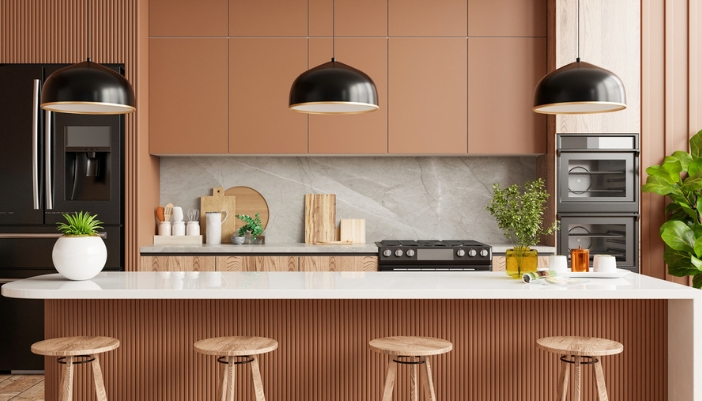
Warmth, Energy, and Why Color Feels Good Again
For a long stretch, the idea of a “nice kitchen” was shaped by open layouts, farmhouse touches, and layers of safe neutrals. Home renovation shows of the early 2000s made that look feel approachable and livable, and it stuck around for years. But after seeing the same palette repeat itself again and again, many kitchens started to blur together.
Now, the mood is shifting. Instead of stripping personality away, design is borrowing from eras that weren’t afraid to show it. Think back to the optimism of 1950s kitchens, where color felt cheerful and intentional, or the 1970s, when deeper, earthier tones made spaces feel grounded and expressive. Those influences are resurfacing not as replicas, but as inspiration for kitchens that feel warmer and more personal.
- Emotional comfort: Softer, warmer colors help kitchens feel relaxed instead of staged. The space feels easier to live in, not just easier to photograph.
- Natural energy: Color adds a gentle sense of movement to the room. Even a little warmth can make cooking and gathering feel more lively and less routine.
- A more human space: Kitchens are becoming lived-in rooms again. Color softens the look and makes the space feel welcoming, rather than overly polished.
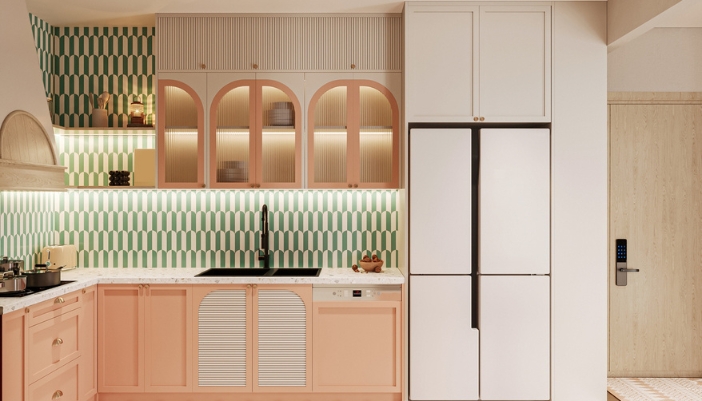
Where Color Shows Up First: Finishes and Accent Moments
Most kitchens don’t flip a switch and suddenly go bold. Color usually reenters the space through finishes and accent decisions first. These are the choices that feel manageable, but still change the tone of the room in a noticeable way.
- Greens with depth: Soft jade, olive, and mossy greens are becoming more popular. These shades feel calming and grounded, inspired by nature and the confident use of color in mid-century kitchens.
- Warmer metal accents: Cooler hardware is giving way to warmer finishes. Handles, knobs, and fixtures with a brushed or golden warmth instantly soften a neutral kitchen and add visual depth.
- Matte over shine: Glossy surfaces and high-shine stainless are stepping back. Matte colors and softer finishes feel quieter and more intentional, matching the trend toward kitchens that feel lived-in instead of like showrooms.
- Accent moments that matter: Islands, cabinetry sections, or standout finishes are becoming focal points. These moments borrow from the 1970s approach of grounding a space with a single confident choice, rather than spreading color everywhere.
Pro Tip:
Let one choice guide the room. Pick a single, colorful finish or accent and design around it. When one element sets the tone, the whole kitchen feels confident without much effort.
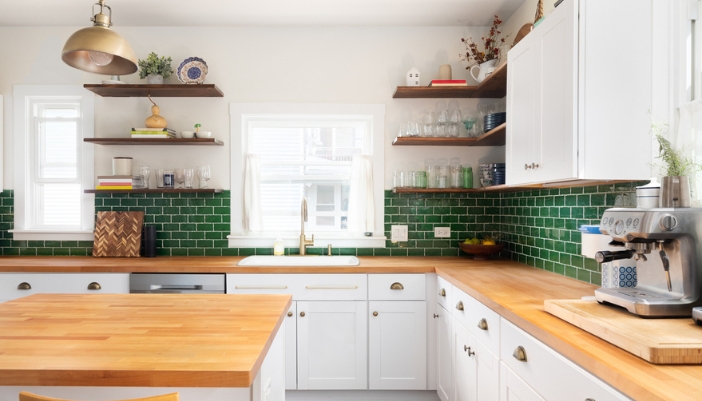
Designing With Mood in Mind (Not Rules)
When color becomes part of the plan, design choices become more flexible. The focus moves from getting everything perfect to creating a kitchen that fits real life. Instead of following a formula, homeowners are looking at how the space works throughout the day.
- Different moments, different moods: Kitchens need energy in the morning and calm in the evening. Softer, warmer colors adjust well as the day changes, keeping the space comfortable all the time.
- Lighting changes the story: Natural light, task lighting, and evening light all affect color in different ways. Warm tones usually stay balanced as lighting changes, while cooler shades can sometimes look harsh.
- Function comes first: Busy households often choose grounding, forgiving colors. Homes that cook and entertain more often pick colors that feel expressive and creative. The best choices start with how the kitchen is used, not just how it looks.
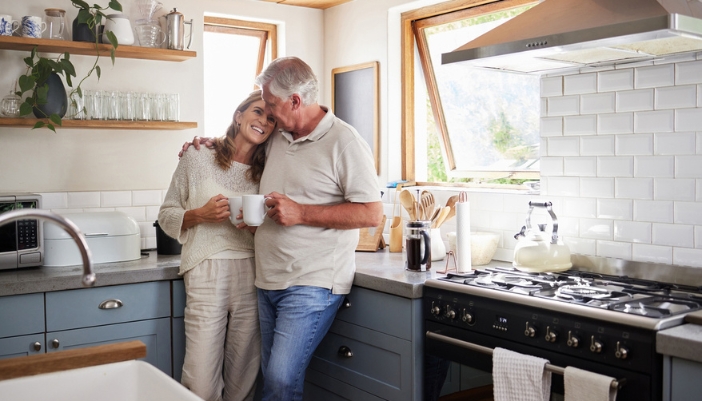
Trust the Feeling, Not the Fear
At the end of the day, the best kitchens aren’t designed around rules or worries about resale. They’re built around comfort, confidence, and choices that feel right over time. Color is a bigger part of that than most people realize. When a space feels good, it gets used more, enjoyed more, and remembered longer.
If you have questions or want another opinion, our experts at Iowa Appliance Center are always here to help. Visit us, explore the selection, and see finishes and colors in person. Sometimes, confidence comes when you see everything come together in real life.